Rare plants growing in a controlled humidity setup

Best Humidifiers for Rare Plants: What Features Matter

A humidifier for rare plants is useful only when dry air is actually limiting the setup. Buying one without measuring the room first often adds maintenance without solving the real problem. Quick answer: choose a humidifier with adjustable output, easy cleaning, enough tank capacity for the room and a way to control humidity automatically. Measure humidity before and after using it rather than running it continuously at maximum output. Best Humidifier Features for Plant Rooms Feature Why it matters Adjustable mist output Prevents over-humidifying a small room Built-in humidistat Lets the unit stop near a target humidity Large top-fill tank Reduces refill frequency Easy-to-clean design Helps control mineral buildup and biofilm Auto shut-off Stops operation when the tank is empty Directional mist Lets you aim output into the room instead of directly onto foliage Quiet operation Important in bedrooms, offices and living rooms 1. Measure Humidity Before Buying Do not assume that dry-looking leaves automatically mean low humidity. Brown edges can also come from root stress, inconsistent watering, fertilizer salts or physical damage. ...
August 28, 2026 · 5 min · 918 words · The Rare Plant Guide
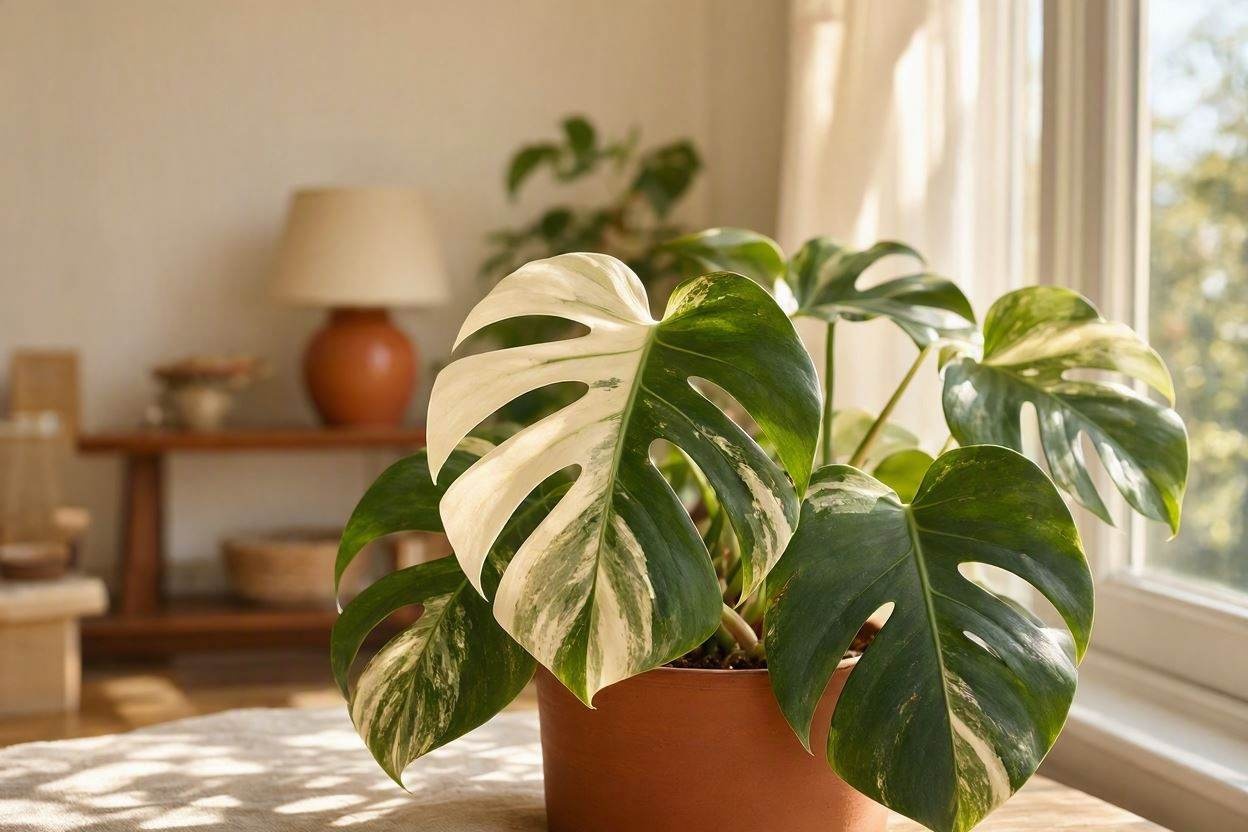
Variegated houseplant foliage pattern

Best Pots for Variegated Monstera: Size, Material & Drainage

The best pot for a variegated Monstera is not the prettiest or largest container. It is the pot that matches the root system, drains reliably and keeps the growing vine stable. Quick answer: choose a pot with drainage holes, move up only modestly in size, and match the material to how quickly your substrate dries. Plastic retains moisture longer; terracotta dries faster; clear nursery pots make root inspection easier. Best Pot Type by Situation Pot type Best for Main advantage Main drawback Plastic nursery pot Most indoor setups Light, inexpensive, moisture-retentive Can stay wet longer in cool/dim rooms Clear plastic pot Root monitoring Easy to inspect roots and moisture Usually needs a cache pot for appearance/stability Terracotta Slow-drying conditions Porous walls speed drying Can dry too fast in hot/dry rooms Heavy ceramic cache pot Top-heavy plants Adds stability Must not trap standing water around inner pot Self-watering pot Experienced, controlled setups Consistent reservoir-based moisture Poor setup can keep roots wetter than intended 1. Plastic Nursery Pots A basic plastic nursery pot is often one of the most practical choices for Monstera. It is easy to lift, easy to drill for extra drainage and simple to place inside a decorative cache pot. ...

August 28, 2026 · 5 min · 990 words · The Rare Plant Guide
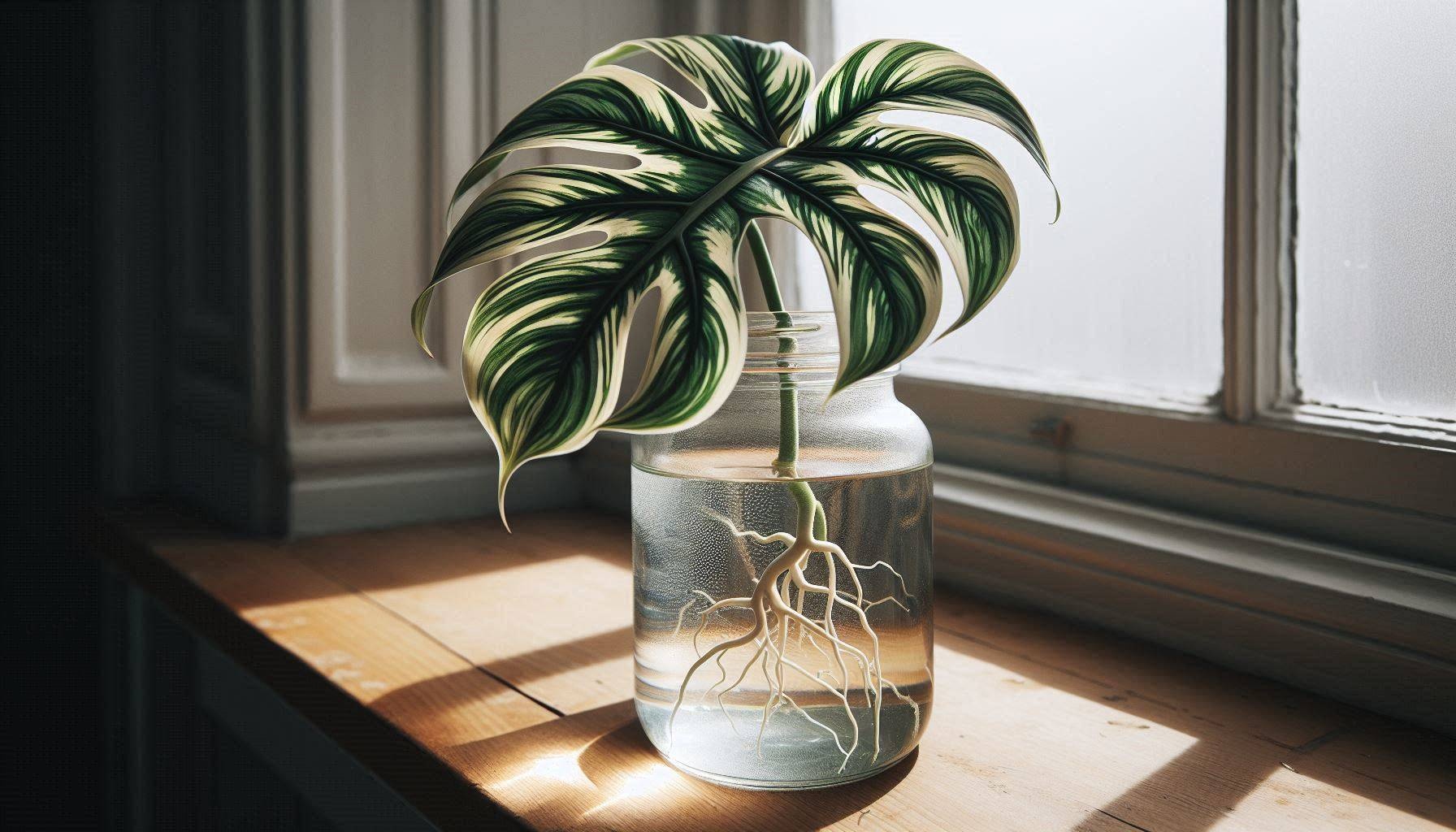
Rare plant cutting developing roots during propagation

Best Rare Plant Supplies: What to Buy for Aroids in 2026

You do not need a room full of gadgets to grow rare plants well. The best rare plant supplies are the ones that solve a real problem: weak light, slow-drying soil, unstable climbing growth, dry air or difficult propagation. Quick answer: prioritize light, drainage, root-zone airflow and support before buying decorative accessories. For most Monstera, Philodendron and Anthurium collections, a reliable setup is more valuable than a long shopping list. ...

August 28, 2026 · 4 min · 787 words · The Rare Plant Guide
Chunky aroid soil mix for rare houseplants

How Often to Water Variegated Monstera: Signs, Not a Schedule

If you are asking how often to water a variegated Monstera, the safest answer is not “every seven days.” Watering frequency changes with the pot, soil mix, light, temperature, root mass and season. Quick answer: water when the upper part of the mix has dried and the pot feels clearly lighter, then water thoroughly until excess drains. In a bright, warm room this may happen much faster than in a cool, low-light room. ...

August 28, 2026 · 7 min · 1390 words · The Rare Plant Guide
Indoor light requirements for Monstera, Philodendron and other rare aroids

How Much Light Do Rare Aroids Need? 100–800 FC Chart

How much light does a rare aroid actually need? The phrase “bright, indirect light” is useful as a warning against harsh sun, but it is too vague to tell you where to place a Monstera, Philodendron, Anthurium or Alocasia. Quick answer: start with moderate, diffused light, observe the newest growth, and increase exposure gradually. Many established aroids perform well around 250-500 foot-candles (FC), while some acclimated variegated plants can use brighter diffused conditions. Treat any numerical range as a starting point rather than a universal rule. ...

August 4, 2026 · 6 min · 1156 words · The Rare Plant Guide