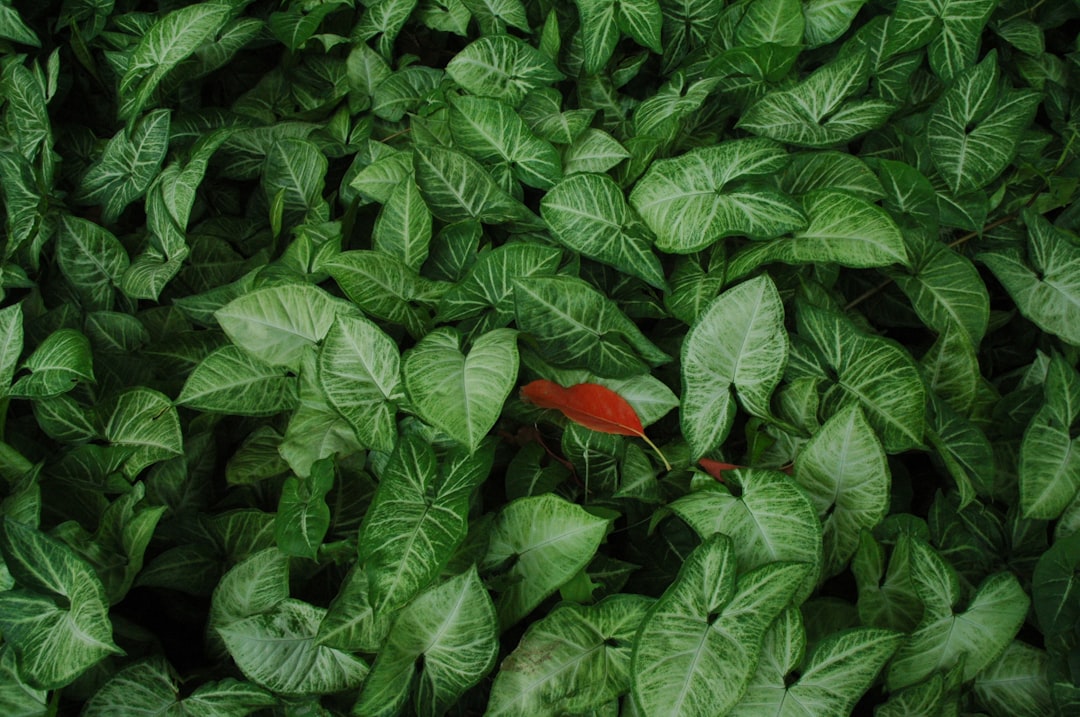

If your variegated Syngonium is losing color, do not diagnose reversion from one green leaf. Look at the newest leaves together with the stem and active growth point.
Quick answer: several solid-green leaves plus an increasingly green stem are stronger signs of reversion. Better light can support healthy growth, but it cannot recreate variegated tissue in a growth point that has become fully green. If a lower node still crosses variegated stem tissue, pruning back to that node may give the next growth point a better chance of producing variegation.
Identifying the Signs of Variegation Loss
Before attempting to correct the issue, it is essential to observe the plant closely. Not every solid green leaf indicates a permanent loss of variegation, but recognizing specific visual patterns helps differentiate a temporary setback from a long-term issue.
- Gradual Fading: New leaves emerge with faint, light-green patches instead of crisp white or yellow variegation.
- Solid Green Trails: Multiple consecutive leaves emerge with absolutely no variegation, featuring only dark green tissue.
- Diminishing Patch Sizes: Each consecutive leaf has progressively smaller variegated areas, culminating in a fully green leaf.
- Asymmetrical Stem Markings: The stripes of color on the stem, which often correspond to leaf variegation, begin to disappear or become entirely green.
These physical changes are signs of a shift in the plant’s growth pattern, but they are not immediate diagnoses. They simply signal that the environmental balance or the genetic trajectory of the plant has shifted.
The Role of Light in Maintaining Variegation
Light is the primary driver behind the production of variegated leaves in most aroids. Because the variegated patches on a variegated syngonium contain little to no chlorophyll, the plant relies heavily on its green sections to capture light and produce energy. If the light levels are too low, the plant compensates by producing more chlorophyll, resulting in solid green leaves that maximize photosynthesis.
To help determine if light is the limiting factor, consider reading about How Much Light Do Your Rare Aroids Actually Need? A Real-Talk Guide to Happy Leaves to optimize the setup.
Conversely, placing the plant in direct, harsh sunlight can scorch the delicate white or cream areas of the foliage. The goal is to provide bright, indirect light. Placing the plant near an east-facing window or a few feet away from a south-facing window with a sheer curtain often provides the ideal balance. If natural light is limited, a high-quality LED grow light placed twelve to eighteen inches above the canopy can help maintain the vibrant colors.
Understanding Variegation Stability in Syngoniums
Unlike some plants with stable, genetic variegation, many syngonium varieties exhibit chimeric variegation. This means the plant is composed of two distinct types of plant tissue: mutated cells that lack chlorophyll and normal cells that contain chlorophyll.
Because these two cell types compete as the plant grows, variegation stability is always a variable factor. If the green cells begin to dominate the growth point (the node), subsequent leaves will likely emerge entirely green. This phenomenon is often referred to as reversion. Understanding this biological process is helpful, as similar struggles affect other popular climbing houseplants; readers can learn more about this in The Heartbreak of Reversion: Why Your Variegated Monstera is Turning Green (and How to Save It).
When purchasing a variegated syngonium, inspecting the stem is just as important as looking at the leaves. A stem with clear, balanced striping of both green and white/yellow tissue indicates a higher probability of stable variegation in future leaves. If the stem becomes completely green, the variegation may be lost permanently along that specific vine unless corrective action is taken.
Proper Syngonium Care to Support Variegated Growth
Consistent syngonium care is essential for maintaining the overall health of the plant, which directly impacts its ability to sustain variegation. A stressed plant is much more likely to prioritize survival over the production of variegated leaves.
- Watering: Water the plant when the top one to two inches of soil feel dry. Overwatering can lead to root damage, which restricts the plant’s ability to take up nutrients and support variegated foliage.
- Substrate: Use a well-draining, chunky potting mix consisting of orchid bark, perlite, and coco coir. Some collectors find that rooting cuttings in alternative mediums before potting can build a robust root system. For more insights on this topic, consider reading Is Sphagnum Moss Actually the Holy Grail for Rare Plant Propagation?.
- Humidity: Maintain humidity levels between 50% and 70%. High humidity supports leaf expansion and prevents the dry, brown edges that often plague the white sections of variegated leaves.
- Fertilization: Apply a balanced, diluted liquid fertilizer during the active growing season. Avoid high-nitrogen fertilizers, as excess nitrogen can encourage rapid, purely green vegetative growth. Always follow the manufacturer’s dilution instructions and application instructions printed on the product label.
Step-by-Step Guide to Pruning for Reversion
If a variegated syngonium has produced three or more solid green leaves in a row, pruning is often necessary to encourage variegated growth from a dormant node that still contains mutated cells.
- Locate the Last Variegated Leaf: Trace the vine back to the last leaf that displayed desirable variegation.
- Examine the Stem Node: Look at the node (the joint where the leaf stem meets the main vine) just below that last variegated leaf. Ensure there is visible stripe patterning on the stem at this node.
- Sanitize Pruning Tools: Clean shears or a sharp knife with rubbing alcohol to prevent the spread of plant pathogens.
- Make the Cut: Cut the stem approximately one-quarter inch above the selected node.
- Provide Optimal Aftercare: Place the pruned plant in a location with bright, indirect light and maintain consistent humidity. This encourages the dormant bud at the node to activate and produce new growth, which has a higher chance of carrying the variegated genetics.
Frequently Asked Questions
Can a completely green syngonium leaf turn variegated again?
No. Once a leaf has fully matured as a solid green leaf, it lacks the genetic mutation in its cells required to develop white, cream, or yellow patches. Variegation cannot develop retroactively on existing foliage.
Does high humidity improve variegation?
Humidity does not directly influence the genetic expression of variegation. However, high humidity preserves the quality of existing variegated patches, which are highly susceptible to drying out, browning, and crisping due to their lack of protective pigments.
Will over-fertilizing cause a variegated syngonium to revert?
Excessive fertilization, particularly with products high in nitrogen, can stimulate rapid growth that prioritizes chlorophyll production. This can lead to a reduction in variegated patches. Always use a balanced formula and strictly adhere to the dilution rates listed on the product label.
To restore variegation, assess the plant’s light exposure, ensure the care routine is consistent, and prune back to a variegated node if solid green leaves persist.
Related Guides
- The Heartbreak of Reversion: Why Your Variegated Monstera is Turning Green (and How to Save It)
- How Much Light Do Your Rare Aroids Actually Need? A Real-Talk Guide to Happy Leaves
Cover photo by Ine Carriquiry on Unsplash.