
Knowing when to repot a variegated Monstera is more important than repotting on a fixed schedule. A plant that is growing well in an airy mix does not benefit from having its roots disturbed simply because a year has passed.
Quick answer: repot when the roots have clearly outgrown the container, the substrate has broken down and drainage has slowed, the pot is mostly roots and dries extremely fast, or you need access to damaged roots. Move up only modestly in pot size and use a chunky, well-aerated mix.
The Best Time to Repot Is When the Plant Actually Needs It
Many care guides suggest repotting every one or two years, but a calendar cannot see the root system.
A fast-growing Monstera in strong light may fill a pot quickly. A smaller or highly variegated plant growing more slowly may remain comfortable in the same container much longer.
Use the plant and root zone as your evidence.
Signs a Variegated Monstera Needs Repotting
1. The root ball has filled the pot
A few roots at a drainage hole do not automatically mean the plant is severely rootbound. More convincing evidence is a dense root mass that has occupied most of the available substrate.
If you can slide the root ball out safely, look for roots circling heavily around the outside with very little loose mix remaining.
2. The pot dries much faster than it used to
A container that has become mostly roots holds less substrate, so it can dry very quickly after watering.
Before repotting, rule out other causes such as warmer weather, stronger light or a move closer to a grow light.
For watering checks, see How Often to Water Variegated Monstera.
3. Drainage has slowed because the mix has broken down
Bark and other organic components become smaller as they decompose. A mix that was once chunky can gradually collapse into a denser material that holds water longer and contains less air.
If drainage is noticeably slower and the root zone remains wet much longer than it used to, replacing the substrate may be more useful than simply increasing the pot size.
4. Root health requires intervention
Soft, dark, hollow or foul-smelling roots are a reason to inspect and possibly repot even if the plant is not rootbound.
When root damage is suspected, the priority is removing unhealthy tissue and correcting the conditions that kept the root zone too wet. Use the root rot troubleshooting guide for the diagnostic steps.
5. The plant has become physically unstable
A tall climbing Monstera can become top-heavy. Repotting may be useful when the existing container no longer supports the plant safely, especially if you also need to install or reposition a support pole.
Stability alone does not mean the root system needs a dramatically larger pot. A heavier outer cachepot or better support can sometimes solve the problem without oversizing the root container.
Signs You Should Probably Wait
Repotting is not always the answer.
Consider waiting if:
- the plant is growing normally;
- the mix still drains freely;
- roots are healthy and not tightly packed;
- the pot dries at a reasonable rate;
- the only concern is one root appearing through a drainage hole;
- the plant has just experienced another major stress such as shipping, pruning or a sudden environmental change.
Avoid stacking several stressful changes together unless there is an urgent root problem.
How Much Bigger Should the New Pot Be?
Choose a pot that is only modestly larger than the current root ball.
The exact diameter increase depends on the plant and pot shape, but the principle is simple: do not surround a relatively small root system with a huge volume of wet substrate.
An oversized pot dries slowly because there are not enough roots using the available water. This can create a root-zone problem even when the soil recipe itself is good.
Best Soil for Repotting Variegated Monstera
Use a substrate with visible structure and air spaces rather than dense potting soil alone.
A practical starting recipe is:
- 40% orchid bark;
- 30% perlite or pumice;
- 20% sphagnum moss or coco coir;
- 10% potting mix or worm castings.
The full Best Soil Mix for Variegated Monstera guide explains how to adjust that ratio for humidity, light, pot material and watering habits.
Step-by-Step: How to Repot a Variegated Monstera
1. Prepare the new pot and mix first
Have the substrate, container and support ready before removing the plant. This keeps the roots exposed for less time.
2. Slide the plant out gently
Support the stem and root ball rather than pulling on the leaves or petioles. If the pot is flexible, squeeze the sides to loosen the root ball.
3. Inspect the roots
Healthy roots should generally feel firm. Trim only clearly dead or rotten tissue with a sanitized tool.
Do not aggressively untangle every healthy root just to make the root ball look neat. Excessive handling can create unnecessary damage.
4. Position the plant at the same depth
Do not bury the stem deeply. Keep the node and stem structure at approximately the same level unless there is a specific reason to change it.
5. Fill without compressing the mix
Add substrate around the root ball and tap the pot lightly to settle it. Avoid packing a chunky mix into a dense block.
6. Water and drain
If the roots are healthy and the new mix needs moisture, water thoroughly until excess leaves the drainage holes, then let the pot drain completely.
After that, return to checking the root zone instead of watering again on a fixed schedule.
Should You Repot After Pruning for Reversion?
Usually there is no need to repot simply because you pruned a reverting vine.
Corrective pruning already changes the plant’s active growth pattern. If the root system is healthy, keeping the pot, light and watering stable can reduce the number of simultaneous stressors.
If the plant is turning green, diagnose the stem separately with Variegated Monstera Turning Green? How to Stop Reversion.
Repotting a Rooted Variegated Monstera Cutting
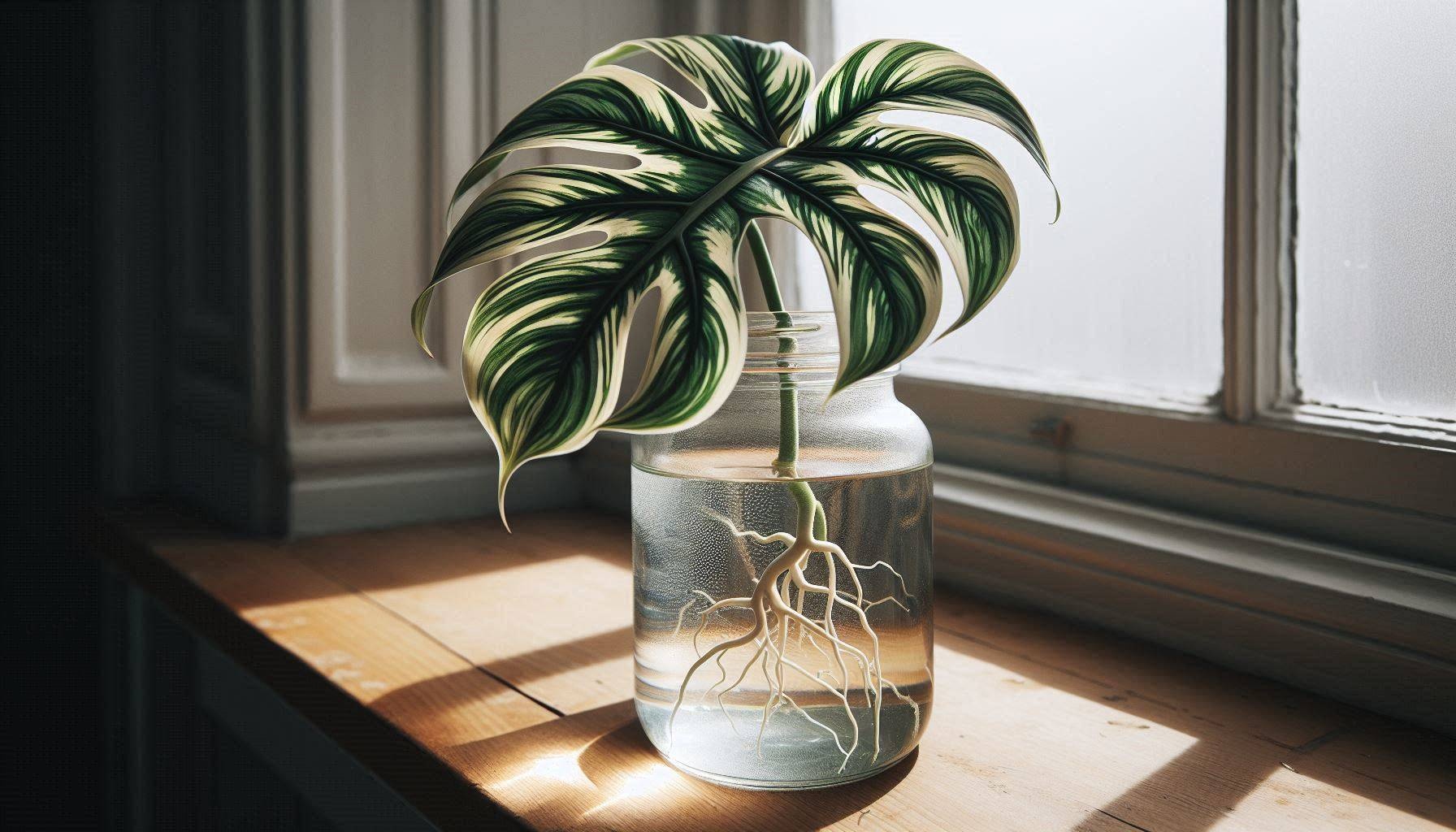
A newly rooted cutting should usually start in a relatively small pot matched to its root system.
Do not move a cutting with a few new roots directly into a large decorative planter. A small root system cannot use the water held by a large volume of substrate efficiently.
If you are still at the cutting stage, read Monstera Node vs Axillary Bud and How to Propagate Variegated Monstera before potting.
How to Reduce Transplant Shock
The best way to reduce stress is usually consistency.
After repotting:
- return the plant to stable bright, indirect light;
- avoid a sudden jump in fertilizer strength;
- do not keep the mix constantly saturated;
- avoid moving the plant through several new environments at once;
- support the stem so new roots are not repeatedly disturbed by movement.
Some temporary slowing after root disturbance can happen. Focus on the condition of the roots and new growth rather than expecting immediate leaf production.
For a broader list of repotting errors across aroids, see Common Mistakes When Repotting Rare Aroids.
Frequently Asked Questions
Should I remove all the old soil when repotting?
Not automatically. If the old mix is healthy and roots are firm, you do not need to strip every particle from the root ball. Remove more of the old substrate when it is badly compacted, degraded, contaminated or hiding damaged roots.
Can I repot a variegated Monstera in winter?
You can repot when root health requires it. For a routine, non-urgent repot, active growing conditions generally make recovery easier than a period of very low light and slow growth.
Should I fertilize immediately after repotting?
There is usually no need to compensate for repotting with a strong fertilizer dose. Let the roots settle, then continue an appropriate feeding routine based on the plant’s growth and the nutrients already present in the mix.
Is terracotta or plastic better?
Both can work. Terracotta often dries faster; plastic retains moisture longer. Choose the pot material together with the soil mix and your watering habits rather than treating either material as universally superior.
Continue the Variegated Monstera Care Series
- Best Soil Mix for Variegated Monstera — choose the substrate before repotting.
- How Often to Water Variegated Monstera — adjust watering to the new pot and root mass.
- Monstera Node vs Axillary Bud — inspect the growth point before propagation or reversion pruning.
- Variegated Monstera Turning Green? How to Stop Reversion — keep reversion diagnosis separate from root-zone problems.