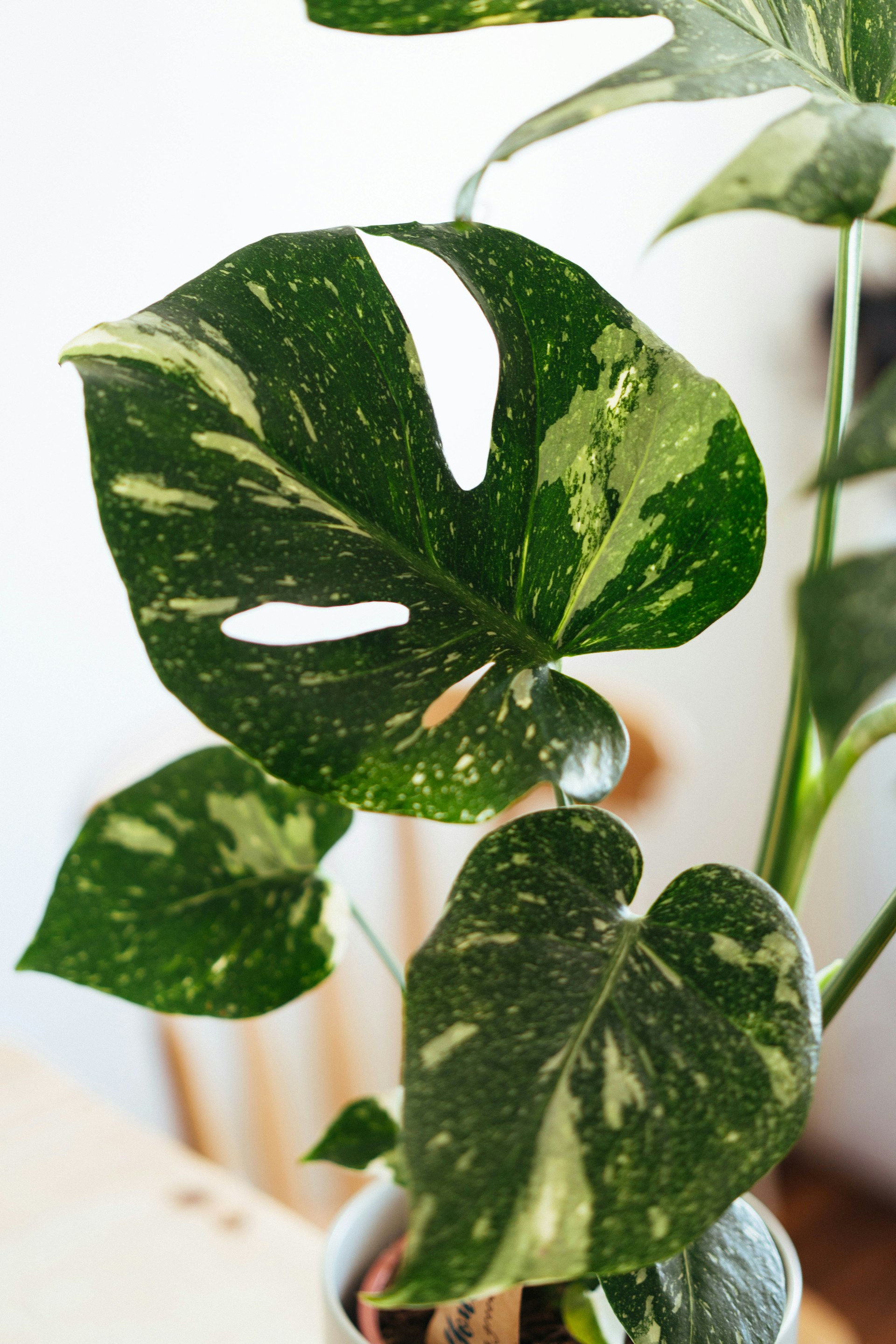
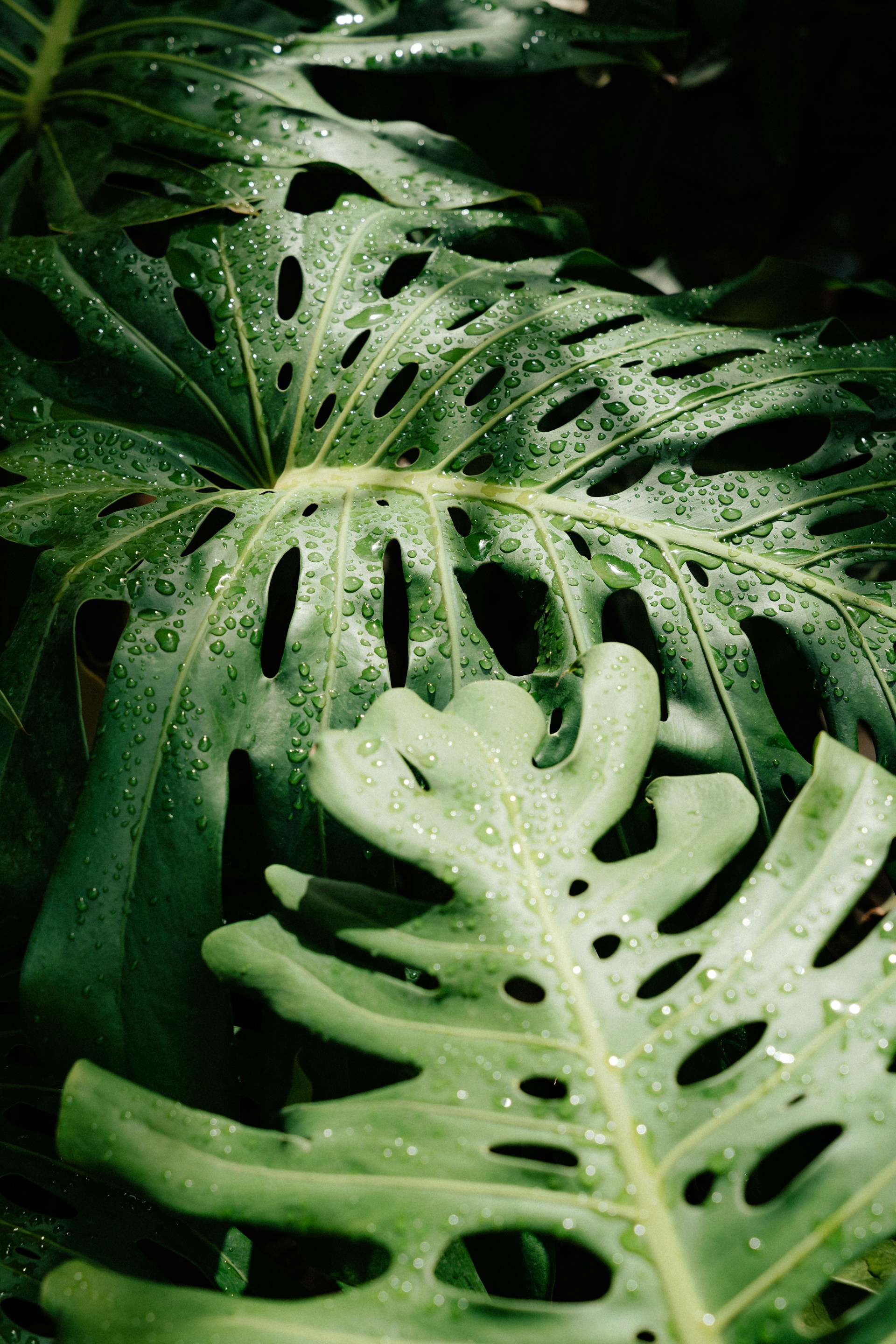
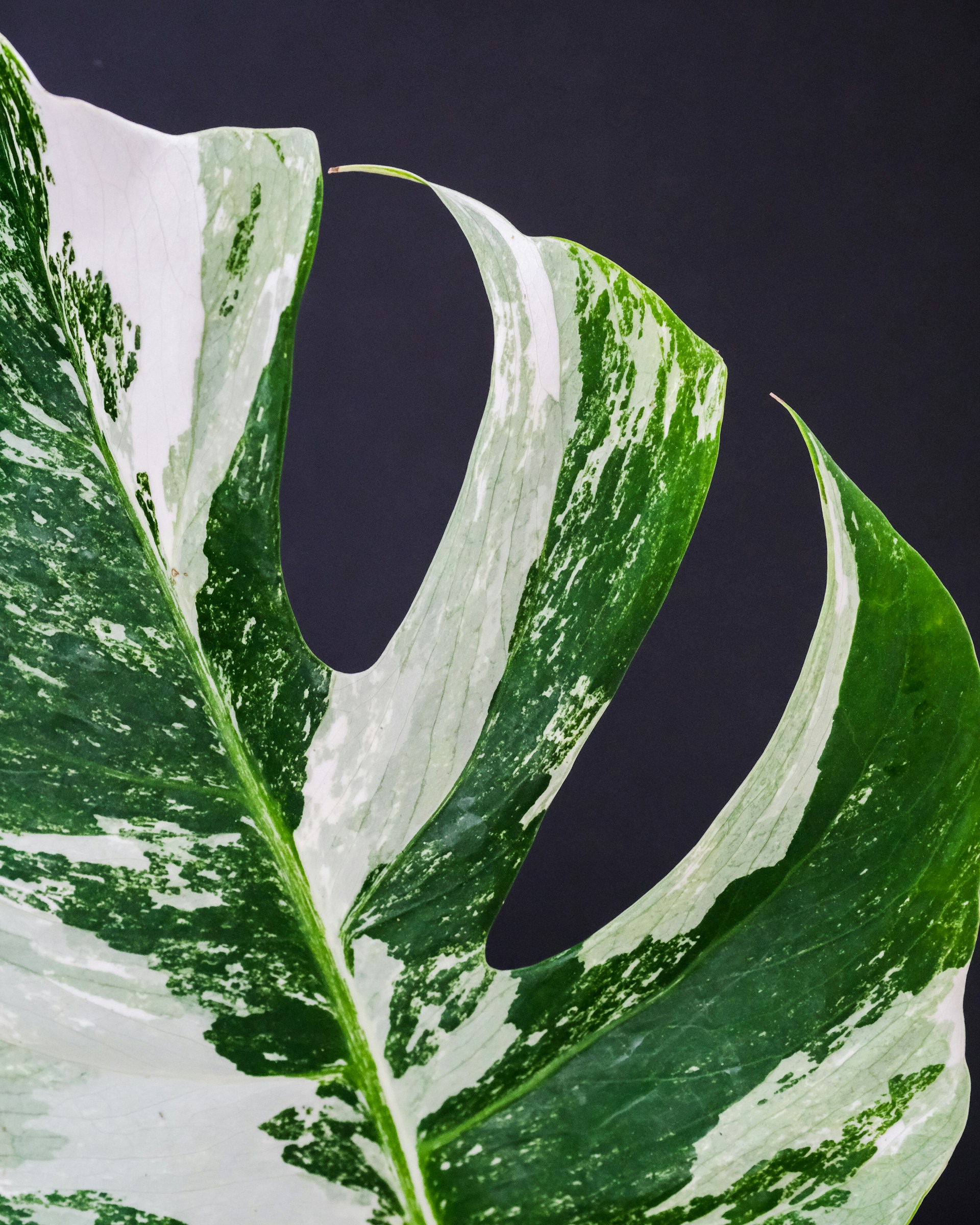
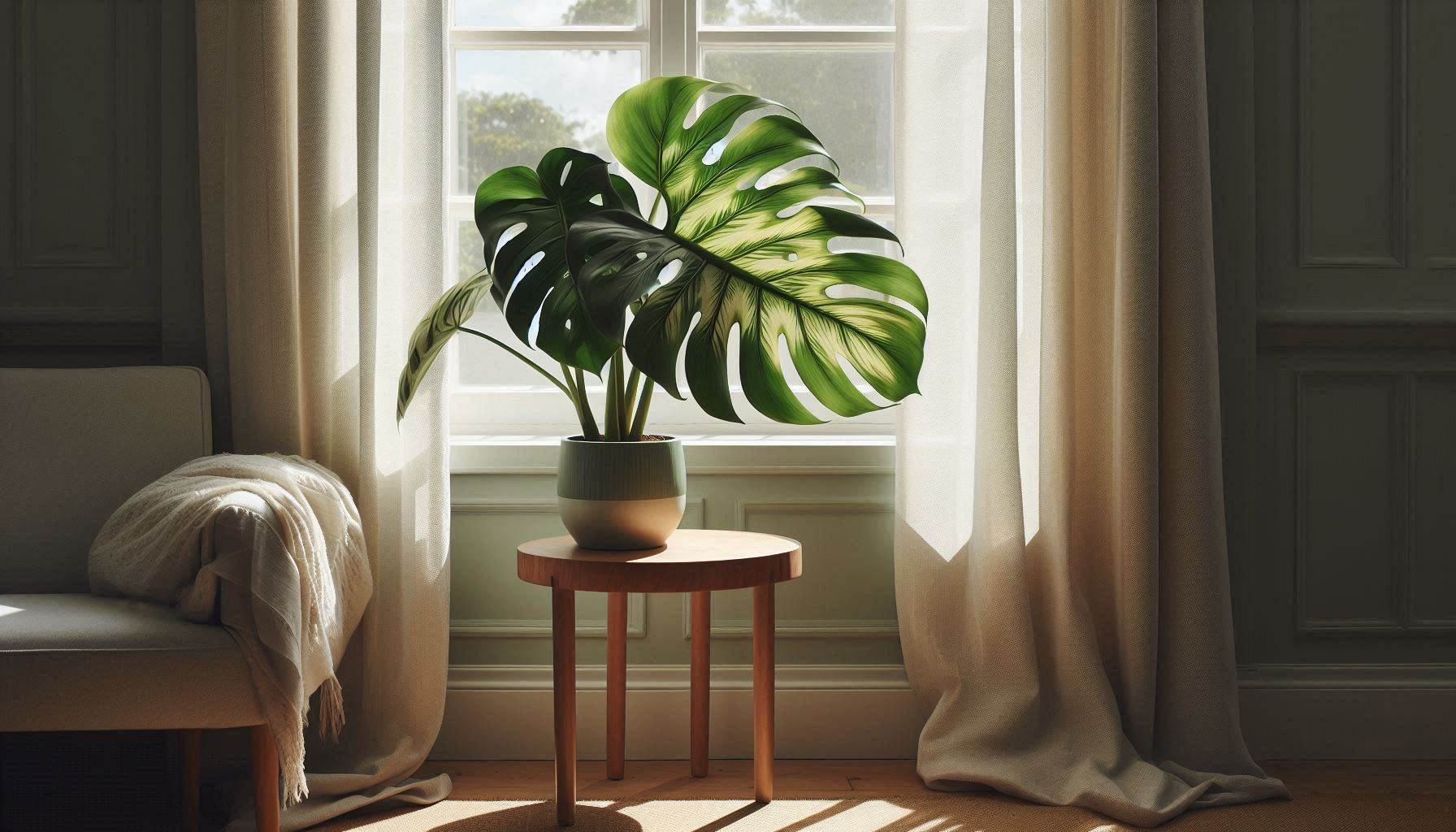
If your variegated Monstera is turning green, do not judge the plant from one leaf alone. The most useful evidence is on the stem, node and active growth point.
Quick answer: one greener leaf can be normal variation. Several solid-green leaves combined with an all-green section of stem are much stronger signs of Monstera reversion. If the newest growth point is fully green, the usual corrective option is to prune back to a node that still crosses visible variegated stem tissue.
Can Monstera reversion be reversed? Sometimes—but only if a lower node or axillary bud still intersects variegated stem tissue. A fully green active growth point will not turn variegated again simply because you add more light or fertilizer.
What Should You Do Next?
If Google already gave you the short answer, use the next step that matches the decision you still need to make:
- Not sure which structure will regrow? See Monstera Node vs Axillary Bud.
- Confirmed reversion and ready to prune? Use Where to Cut a Reverting Variegated Monstera.
- Want to save the removed top? Follow How to Propagate Variegated Monstera if it contains a viable node.
- Need supplemental light after pruning? Compare the 3 Best Grow Lights for Rare Plants after confirming that light is actually limiting.
The important distinction is that light supports growth; it does not recreate variegated tissue in a fully green growth point. If true reversion is confirmed, the actionable decision is which lower node to keep.
Is It Really Reversion?
A variegated Monstera can produce leaves with different amounts of white, cream or yellow from one leaf to the next. A single greener leaf does not automatically mean the plant has permanently reverted.
Look for a pattern:
- two or more consecutive leaves emerging solid green;
- the newest internodes losing visible cream or white striping;
- an axillary bud sitting in an entirely green section of stem;
- each new leaf carrying less variegation than the one before it.
The stem matters because future growth comes from buds at the nodes, not from the existing leaf blade itself.
Why Variegated Monstera Can Revert to Green
Many Monstera Albo and Aurea plants show chimeric variegation. Their stems contain a mixture of normal green tissue and mutated tissue with little or no chlorophyll.
As the vine grows, those cell layers are not guaranteed to remain evenly distributed through every new growth point. A new bud may contain a balanced mixture, mostly variegated tissue, or mostly green tissue.
Green tissue performs most of the photosynthesis. White tissue contributes little or none, so a heavily variegated plant depends on its green sections for energy. Growing conditions affect how well the plant performs, but they do not rewrite the genetic makeup of a fully green growth point.
Read the Stem, Not Just the Leaves
Follow the cream or white striping along the main vine and inspect where it crosses each node and dormant axillary bud.
A bud that overlaps both green and variegated tissue has a better chance of producing mixed growth than a bud sitting in an entirely green section. That visual check is useful, but it is not a guarantee: the pattern inside the growth point cannot be predicted perfectly from the outside.
If you need better supplemental lighting after pruning, use the grow light setup guide and acclimate the plant gradually.
Does More Light Stop Monstera Reversion?
Light is important for plant health, but it is often oversimplified in discussions about reversion.
Low light can weaken a highly variegated Monstera because less green leaf area is available for photosynthesis. However, more light cannot turn a fully green node back into a variegated one.
Provide bright, indirect light and stable care so the plant has enough energy to support new growth. Avoid extreme light or fertilizer changes in an attempt to force white sections back into the stem.
For measured indoor-light guidance, see How Much Light Do Rare Aroids Need?.
Should I Cut Off Green Leaves on a Variegated Monstera?
Do not remove a green leaf just because it is green. A green leaf still photosynthesizes and can help support the plant.
The more important question is whether the new stem and active growth point are also fully green. If one leaf is green but the stem still shows usable variegation, monitor the next growth. If several leaves and the newest stem are solid green, pruning the vine back to a suitable variegated node is usually more useful than removing individual leaves.
In other words, corrective pruning targets the growth point, not the leaf blade by itself.
When Should You Prune a Reverting Monstera?
If only one leaf is greener than usual and the stem still carries strong variegation, monitoring the next leaf can be reasonable.
Pruning becomes more compelling when:
- several consecutive leaves are solid green;
- the newest stem is also solid green;
- the active growth point no longer intersects visible variegated tissue;
- older nodes below still show usable green-and-variegated striping.
Waiting through a long run of all-green stem can reduce the number of suitable nodes available for a corrective cut.
How to Prune a Variegated Monstera That Is Reverting
1. Trace the vine backward
Start at the newest solid-green growth and work down the stem until you find the last node with clear green-and-variegated striping.
2. Inspect the axillary bud
Look closely at the dormant bud near that node. Prefer a node where the bud appears to intersect both green and variegated stem tissue.
3. Sanitize your cutting tool
Clean sharp shears or a knife with isopropyl alcohol before cutting.
4. Cut above the selected node
Remove the reverted top while leaving the chosen node on the mother plant. Do not cut so close that the node or bud is damaged.
5. Keep aftercare stable
Return the plant to stable bright, indirect light. Avoid immediately changing the pot, fertilizer, humidity and lighting at the same time unless another problem requires it.
If the root zone also needs attention, use the best soil mix for variegated Monstera rather than combining pruning with an unnecessarily heavy or oversized repot.
The removed green top can still be propagated as a normal green Monstera if it contains a viable node. For propagation technique, see How to Propagate Variegated Monstera.
What to Watch After Pruning
The selected dormant bud may take time to activate. Judge the result from the new stem and the next few leaves, not from the old leaf attached to the node.
If the replacement vine again emerges completely green, the chosen growth point may not contain enough variegated tissue. A second corrective cut may be possible if another suitable node remains below.
If the new growth is extremely white with very little green, do not assume that more white is always better. The plant still needs enough chlorophyll-bearing tissue to support itself.
Frequently Asked Questions
Can a reverted Monstera go back to being variegated?
Sometimes. A new vine can show variegation if it grows from a node that still contains variegated tissue. A fully green active growth point will not regain variegation simply because the plant is moved into brighter light.
Can a solid-green leaf turn variegated later?
No. The pattern of an existing mature leaf does not change from solid green to genetically variegated. The goal is to influence which existing node produces the next vine by pruning back to a suitable growth point.
Should I cut after the first green leaf?
Not automatically. Check the stem and wait for the next growth if the node still shows good variegation. Several consecutive green leaves plus an all-green stem section are stronger evidence of reversion.
Does fertilizer increase variegation?
Fertilizer can support general growth when nutrients are limiting, but it cannot create variegated tissue in a fully green node. Avoid using unusually strong fertilizer in an attempt to force a pattern change.
Continue the Variegated Monstera Care Series
- How to Propagate Variegated Monstera — choose a viable node and root the cutting safely.
- Best Soil Mix for Variegated Monstera — use an airy mix after the cutting is ready to pot.
- How Much Light Do Rare Aroids Need? — use measured light ranges instead of guessing.
- Best Grow Lights for Rare Houseplants — choose and position supplemental lighting.
Cover photo by Sarah Dorweiler on Unsplash.