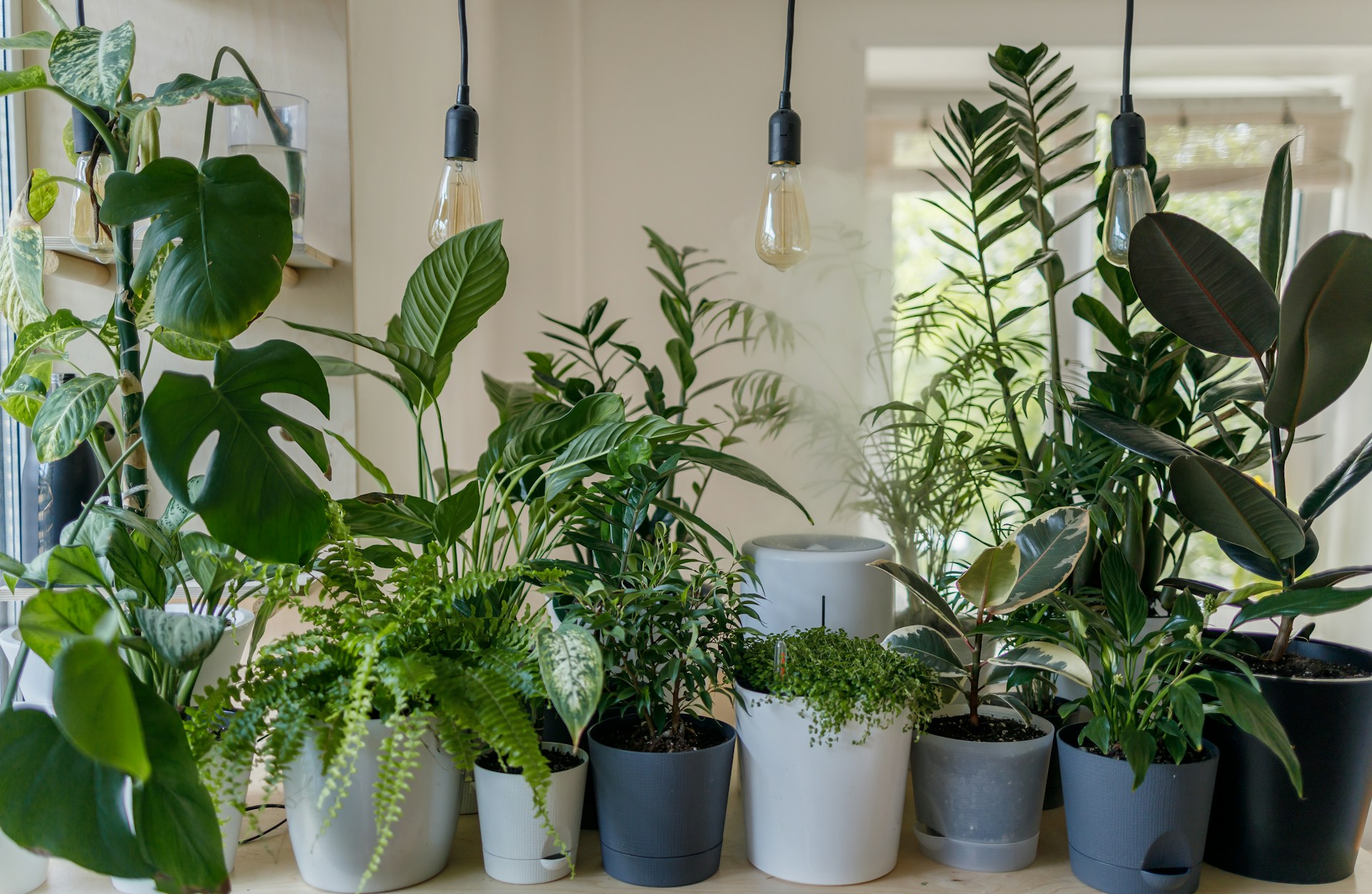

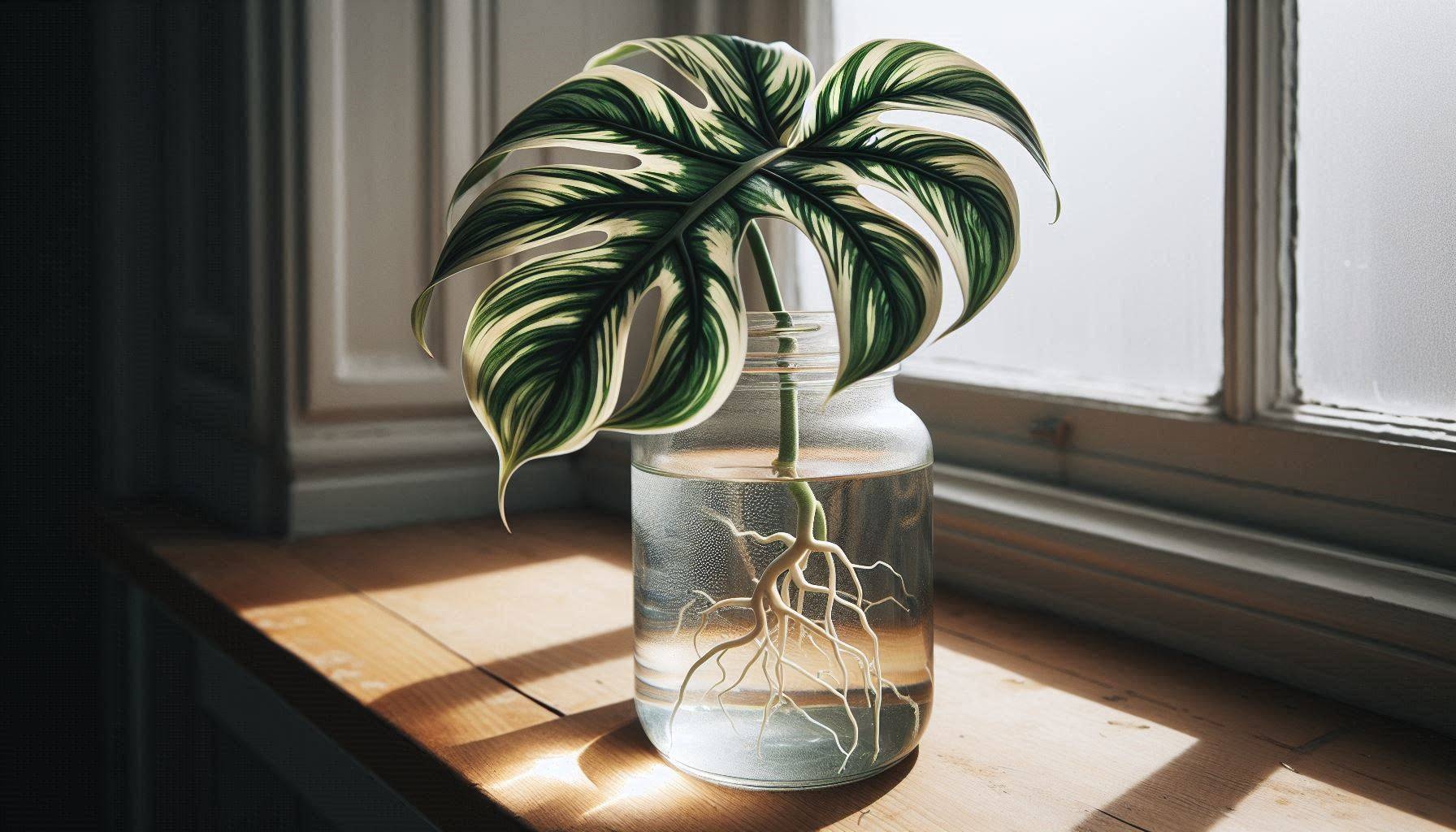
The Monstera Thai Constellation (Monstera deliciosa ‘Thai Constellation’) is a variegated cultivar of the Swiss cheese plant, with cream speckles across large, split leaves. Its care is similar to a regular Monstera deliciosa, with extra attention to light and watering because the pale parts of the leaf contain less chlorophyll.
Quick answer: Give it bright, indirect light, water when the top few inches of soil have dried, use a chunky, well-draining mix, and provide a pole or trellis as it climbs. Higher humidity can help, but exact targets depend on the growing environment. Brown spots can result from sun exposure, dry conditions, excess moisture, fertilizer or pests; the pattern is a clue, not a diagnosis.
Monstera Thai Constellation care at a glance
| Need | Practical guidance |
|---|---|
| Light | Bright, indirect light; introduce any stronger light gradually |
| Water | Water thoroughly after the upper few inches of mix have dried, then let excess drain |
| Soil | Chunky, airy, well-draining aroid mix |
| Humidity | Moderate to higher humidity can support healthy foliage; 60–70% is one specialist nursery’s growing setup, not a universal requirement |
| Support | A moss pole or trellis can support climbing growth |
| Feeding | Feed lightly during active growth; reduce or stop feeding in fall and winter |
| Pets | Monstera deliciosa is listed as toxic to cats and dogs if ingested (ASPCA) |
These recommendations summarize published guidance; they are not our own controlled growing measurements.
How this guide was prepared
This is a research-based summary of information from a specialist nursery, horticultural references and the ASPCA. It is not based on our own growing trials or lab tests. Where a claim comes from a seller, we identify it as such rather than presenting it as an independently verified finding.
What is Monstera Thai Constellation?
Its botanical name is Monstera deliciosa ‘Thai Constellation’. It is a cultivar of the Swiss cheese plant, not a separate species. It is commonly sold with cream speckles and marbling across green leaves.
Is it rare? It is a collector plant, but tissue-culture propagation has made it more widely available than it once was. Availability and price vary by plant size, variegation and seller.
Does it revert? Rare Plant Fairy, a specialist nursery that sells it, says its variegation is more stable than that of some other variegated Monsteras. That is the seller’s claim, not an independent comparative trial, and it does not guarantee that every leaf will have the same pattern. Judge changes over several new leaves rather than one leaf. If new growth is mostly green, see our guide to Monstera reversion.
Published accounts differ on the cultivar’s early history, so this guide does not assign a definitive origin date.
For the broader topic, see our variegated Monstera guide.
Light
Bright, indirect light is the best starting point. A bright window with filtered light or a suitable full-spectrum grow light can work. Pale variegated tissue has less chlorophyll, so the plant needs usable light, but abrupt exposure to harsh direct sun can scorch leaves.
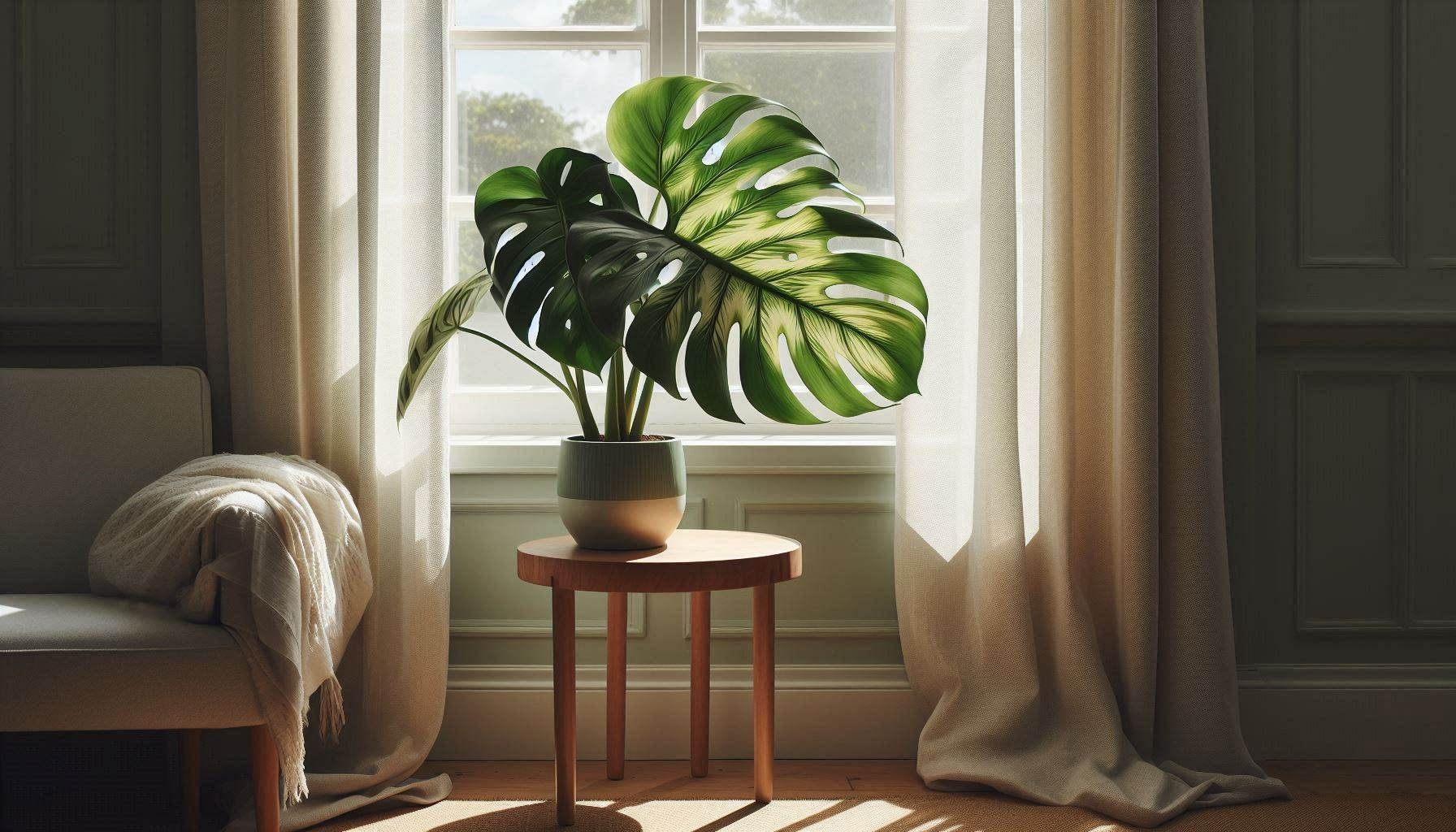
In a dim room, a grow light may help support steadier growth. See our grow lights for Monstera Thai Constellation and light guide for rare aroids.
Watering: how to check before you water
Water thoroughly once the upper few inches of potting mix have dried, then let the pot drain completely. Do not leave it standing in water. The exact interval depends on pot size, mix, temperature, light and season, so a fixed weekly schedule is unreliable.
- Finger test: Check a few inches into the mix. If it still feels damp, wait.
- Pot weight: Compare the weight after watering with its weight as the mix dries.
- Wooden skewer: Insert it into the mix and check whether it comes out damp or coated with wet soil.
A plant in a large pot or dense mix may stay wet much longer than expected. If the pot remains heavy and damp for days, check drainage and the mix rather than adding more water.
Soil
Use a chunky, airy mix that allows excess water to drain while retaining some moisture around the roots. Bark and perlite are common components of aroid mixes. If water pools on the surface or the pot stays wet for too long, the mix may be too dense for your conditions.
See our soil mix guide for variegated Monstera for more detail.

Humidity and temperature
Moderate to higher humidity can help tropical foliage stay in good condition, especially in rooms with dry air or winter heating. Rare Plant Fairy describes growing Thai Constellation at 60–70% humidity; treat that as the nursery’s own setup, not a minimum every home must reach. A humidifier gives more consistent results than occasional misting.
Avoid cold drafts and sudden temperature drops. If you use a humidifier, allow airflow around the plant and avoid leaving leaves persistently wet.
See our best humidifiers for rare plants.
Support
Monstera deliciosa is a climbing plant. A moss pole or trellis can support the stem as it grows and help keep the plant upright. Support is not mandatory for survival, and it does not guarantee larger leaves, but it provides a climbing structure as the plant matures.
See our moss pole guide for Monstera.
Feeding and repotting
Feed conservatively during active spring and summer growth, following the fertilizer label and avoiding stronger concentrations than recommended. Reduce or stop feeding when growth slows in fall and winter. Repot when roots have filled the pot or the mix has broken down, usually moving only one pot size up. Use fresh, airy mix and avoid unnecessary root disturbance.
Monstera Thai Constellation brown spots: possible causes and what to try
Brown spots have several possible causes. Use the pattern and the condition of the soil to decide what to check first; do not treat the table as a definitive diagnosis.
| What you see | Possible cause | What to check | First step |
|---|---|---|---|
| Dry, crispy tips or edges | Low humidity or the mix drying too far | Are edges papery? Has the mix become very dry? | Stabilize watering and consider moderately higher humidity |
| Dry tan or brown patches on pale areas | Sun scorch | Did the damage appear after stronger direct sun? | Move the plant out of harsh direct sun and acclimate gradually |
| Soft, dark spots that spread | Excess moisture or root problems are possible | Is the mix staying wet? Are leaves yellowing or drooping? | Check drainage and inspect roots if decline continues |
| Spots with webbing or visible insects | Pest damage | Inspect leaf undersides, stems and leaf joints | Isolate the plant and identify the pest before treating |
| Brown edges after feeding | Fertilizer stress is possible | Was fertilizer applied too strongly or to dry roots? | Stop feeding temporarily and review label directions |
More than one issue can be present at once. Start with the most likely cause, change one condition at a time and watch how new damage develops. Existing brown tissue will not turn green again. If spots spread quickly, the stem becomes soft, or the plant declines despite correcting care, inspect the roots and check carefully for pests.
Should you cut off a brown spot? You can trim badly damaged tissue with clean, disinfected scissors, but avoid removing an otherwise healthy leaf just because it has a small blemish.
Curling, drooping or fewer speckles
| Symptom | Possible explanations |
|---|---|
| Curling leaves | Dry mix, dry air, heat or root stress |
| Drooping | Too much or too little water, root issues or recent repotting |
| Fewer speckles on new leaves | Normal leaf-to-leaf variation, light conditions or other growing factors |
More light may improve growing conditions, but it cannot guarantee a particular variegation pattern on future leaves.
Thai Constellation vs. Monstera Albo
| Thai Constellation | Monstera Albo | |
|---|---|---|
| Typical pattern | Cream speckles and marbling, sometimes with larger cream sections | Often larger, sharply divided white sections |
| Variegation | Usually described as a more stable mottled pattern | Variegation can vary substantially between leaves and growth points |
Patterns vary on both plants. A single photograph is not always enough to identify a plant with confidence.
Propagation
A stem cutting needs a viable node to produce new growth. A leaf without a node will not grow into a new plant. Rooting in water or a suitable moist propagation medium can work, but success depends on the cutting’s condition and care.
Follow our step-by-step Thai Constellation propagation guide.
Is Monstera Thai Constellation toxic to pets?
The ASPCA lists Monstera deliciosa as toxic to cats and dogs if ingested. Keep the plant out of reach of pets and children. If you think a pet has chewed or swallowed part of the plant, contact a veterinarian for advice. Check the ASPCA toxic and non-toxic plant list.
Frequently asked questions
What is the scientific name of Thai Constellation Monstera?
Monstera deliciosa ‘Thai Constellation’.
Is Thai Constellation Monstera rare?
It remains a collector plant, but tissue-culture propagation has made it more widely available. Price and availability vary by size, variegation and seller.
How do you care for Thai Constellation Monstera?
Provide bright, indirect light, water when the upper few inches of mix have dried, use an airy aroid mix, support climbing growth and feed lightly during active growth. Adjust watering to the actual drying rate of the pot rather than a calendar.
Why does my Thai Constellation Monstera have brown spots?
Possible causes include sun scorch, dry conditions, excess moisture, fertilizer stress and pests. Check the pattern, soil moisture, recent changes in light and the undersides of leaves before choosing a fix.
How do you propagate Thai Constellation Monstera?
Use a stem cutting with a viable node. See our propagation guide.
Does Thai Constellation Monstera revert?
Rare Plant Fairy says its variegation is relatively stable, but this is a seller’s claim rather than an independent trial. Leaf patterns can vary. See our Monstera reversion guide.
Does it need a moss pole?
No, a pole is not essential, but a pole or trellis can support its climbing growth.
More Monstera guides
- Variegated Monstera care guide
- Best grow lights for rare plants
- Best plant stands with grow lights
- Best propagation supplies for variegated Monstera
Sources
- Royal Horticultural Society: Monstera deliciosa ‘Thai Constellation’ — cultivar reference.
- Rare Plant Fairy: Monstera Thai Constellation, what makes it different — specialist nursery guidance on variegation, light, humidity, watering and brown margins; commercial source, not an independent trial.
- Monrovia: Swiss Cheese Plant care notes — general Monstera deliciosa care guidance.
- ASPCA: Toxic and non-toxic plants — pet safety.