How much light does a rare aroid actually need? The phrase “bright, indirect light” is useful as a warning against harsh sun, but it is too vague to tell you where to place a Monstera, Philodendron, Anthurium or Alocasia.
Quick answer: start with moderate, diffused light, observe the newest growth, and increase exposure gradually. Many established aroids perform well around 250-500 foot-candles (FC), while some acclimated variegated plants can use brighter diffused conditions. Treat any numerical range as a starting point rather than a universal rule.
Practical Indoor Light Ranges for Rare Aroids
Light can be measured in foot-candles (FC) or lux. The reading should be taken at leaf height, where the plant actually receives the light.
These ranges are practical starting points, not hard limits:
| Light level | Starting range | Examples to test cautiously |
|---|---|---|
| Low to medium | 100-250 FC | Some jewel Alocasias and shade-adapted velvet Anthuriums |
| Medium to bright | 250-500 FC | Many established Philodendrons and Monsteras |
| Brighter diffused light | 500-800 FC | Some acclimated variegated aroids with no harsh direct sun |
Species, leaf age, season, window direction, fixture distance and acclimation all matter. Two plants of the same species can respond differently if one has been grown in much dimmer conditions.
Why Light Changes Should Be Gradual
A plant adapted to a dim shelf can scorch after a sudden move into direct sun or immediately beneath a strong LED panel.
Increase light in steps over roughly one to two weeks. Watch the leaves closest to the source for:
- pale or bleached patches;
- tan or crisp areas;
- leaf surfaces becoming noticeably warm;
- damage appearing soon after a major increase in exposure.
Existing light damage does not turn green again, so the goal is to prevent additional injury while the plant produces new leaves.
How Much Light Do Monstera and Philodendron Need?
Many climbing Monstera and Philodendron species respond well to medium-to-bright diffused light once acclimated.
Too little light can show up as:
- longer gaps between leaves on the vine;
- smaller new leaves;
- slow or stalled growth;
- a plant leaning strongly toward a window;
- potting mix remaining wet much longer because the plant is using less water.
A brighter location can improve growth when light is the limiting factor, but do not treat every slow plant as a lighting problem. Root health, temperature, pests and nutrition can produce similar symptoms.
How Much Light Do Variegated Aroids Need?
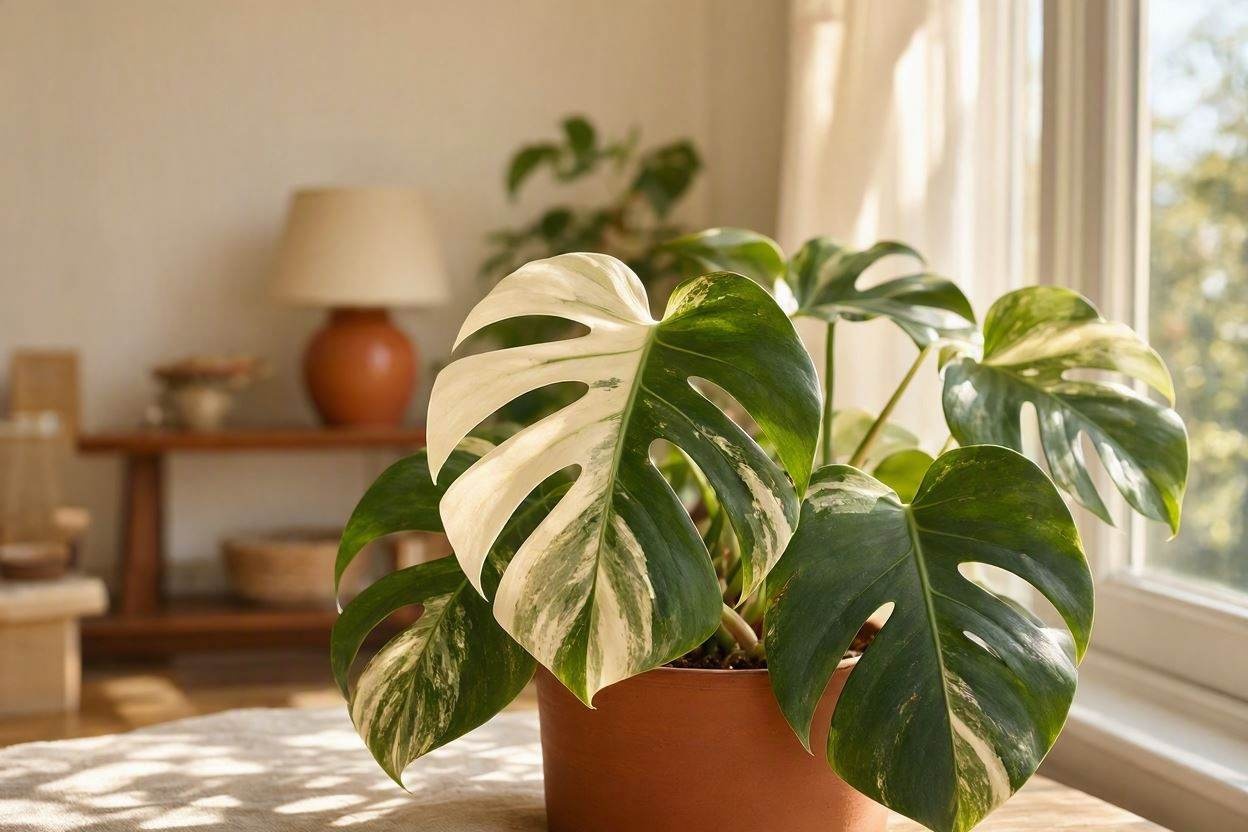
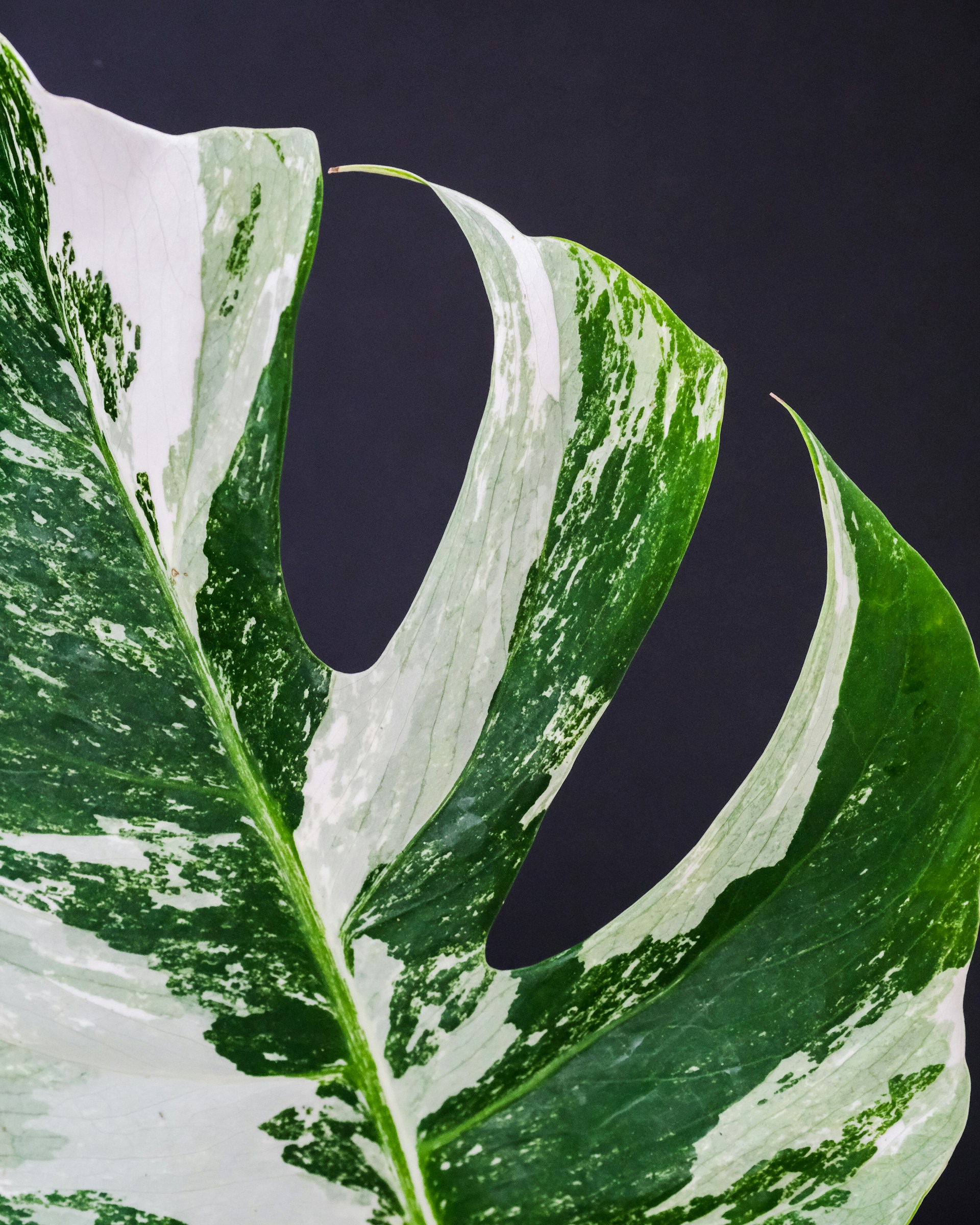
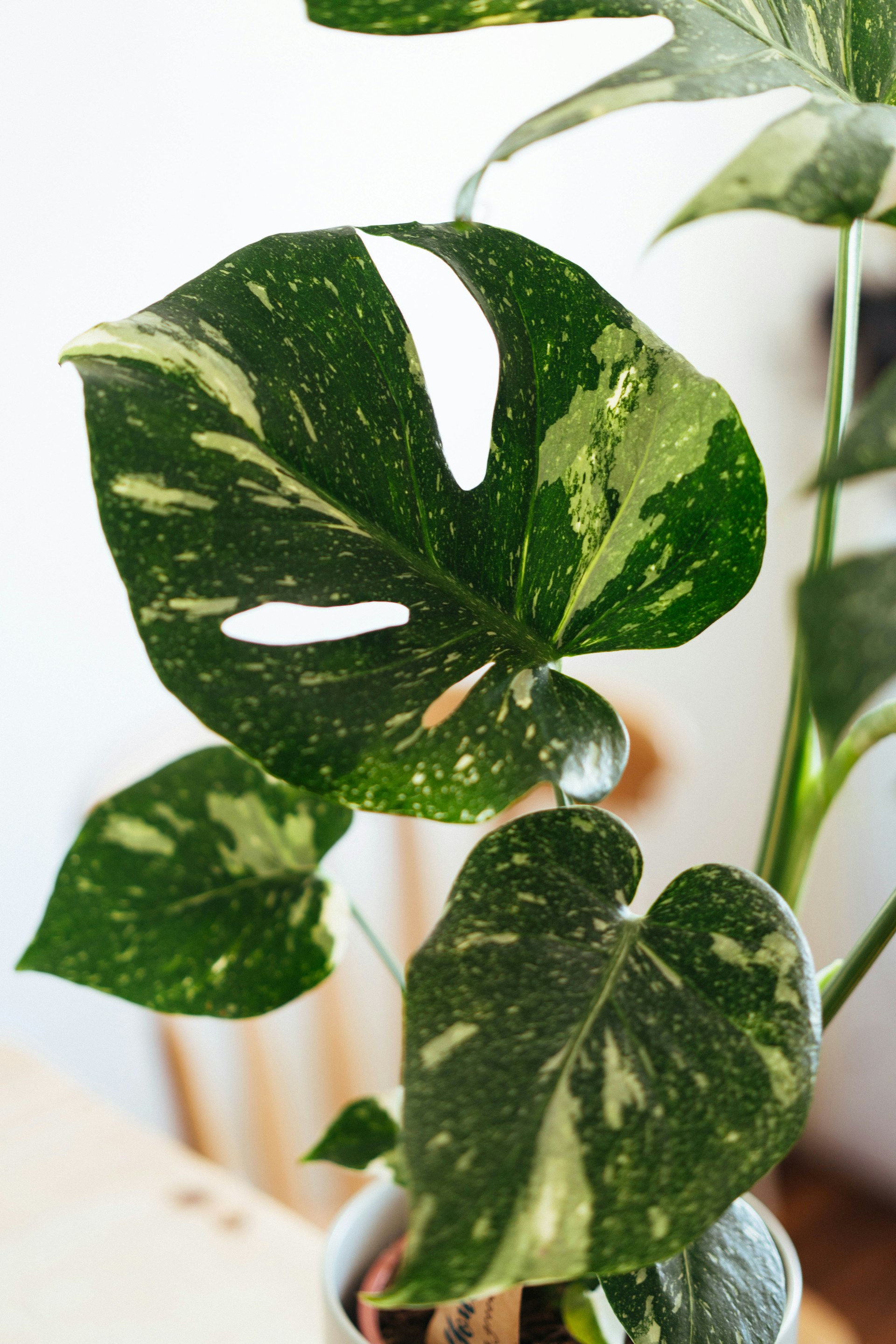
White, cream or yellow sections contain less chlorophyll than green tissue. A heavily variegated plant therefore has less photosynthetic leaf area and may benefit from brighter conditions than a comparable solid-green plant.
That does not mean maximum intensity is better. Variegated sections can show bleaching and scorch clearly, so broad, diffused coverage and gradual acclimation are safer than a sudden jump in light.
Also, stronger light does not genetically restore a fully reverted growth point. If your Monstera is producing consecutive solid-green leaves, inspect the stem and node using Variegated Monstera Turning Green? Can Reversion Be Reversed?.
How to Measure Light at Home
A dedicated light meter gives the most consistent readings. A phone light-meter app can still be useful for comparing positions if you use the same phone, angle and time of day.
Take readings:
- at leaf height rather than beside the pot;
- at several points across a shelf or cabinet;
- at the same time on different days if you are comparing locations;
- before and after moving a grow light or changing its height.
The purpose is not to chase a perfect number. It is to understand whether one location is dramatically brighter or dimmer than another.
Using Grow Lights for Rare Aroids
Artificial lighting is useful when window light is weak, seasonal or uneven.
For most home setups, look for:
- full-spectrum LED output;
- coverage that matches the shelf or growing area;
- adjustable height or dimming;
- a timer;
- manufacturer guidance for mounting distance.
A 10-to-14-hour daily schedule is a practical range to test for supplemental lighting. Duration and intensity work together: a strong fixture used for a shorter period can deliver more light than a weak fixture left on longer.
For choosing and positioning a fixture, see Best Grow Lights for Rare Houseplants.
Need a fixture now? Compare our 3 grow-light picks for 2026 with product-by-product setup notes and recent tracked prices.
Signs an Aroid Is Not Getting Enough Light
Look for a combination of changes over several new leaves:
- internodes becoming longer;
- leaves becoming progressively smaller;
- slow growth during an otherwise active period;
- strong leaning toward the light source;
- substrate drying much more slowly than before.
Do not use loss of variegation by itself as a light meter. Genetic reversion and light stress are related to different processes and should be diagnosed separately.
Signs the Light May Be Too Strong
- bleaching on the uppermost leaves;
- dry, paper-like patches after a light increase;
- crisp margins on tissue nearest the source;
- leaves becoming hot under the fixture;
- damage concentrated on the side facing a window or lamp.
If these appear, increase distance, reduce intensity or shorten exposure, then let the plant acclimate before making another change.
Light, Watering and Root Health Are Connected
A plant in brighter conditions often uses water faster than the same plant in a dim room. That is why watering on a fixed calendar can fail when seasons or lighting change.
Check the actual root zone and use an airy substrate. The Best Soil for Variegated Monstera: 40/30/20/10 Aroid Mix guide shows how bark, perlite and moisture-retentive material can be balanced for an aroid mix.
If the plant is wilting while the mix remains wet, inspect the roots rather than automatically adding water. The Philodendron Root Rot guide explains the warning signs.
Frequently Asked Questions
Is a north-facing window enough for rare aroids?
It can be for some plants and seasons, but window direction alone does not tell you the actual light at leaf level. Distance from the glass, outdoor obstructions and latitude can change the result dramatically.
Can a grow light replace window light completely?
Yes, a sufficiently sized artificial-light setup can support indoor plants without strong window light. Coverage and intensity need to match the plants and the size of the growing area.
Should I rotate my aroids?
Rotation can help keep growth visually balanced when light comes mainly from one direction. Climbing plants attached to a support may naturally orient their leaves toward the strongest light source.
Variegated Monstera Next Steps
If the plant you are lighting is a variegated Monstera, continue with the guides that match the problem:
The best setup is the one you can keep consistent and adjust based on what the newest growth is telling you.