PropagationStem cutting with a node; division of established rooted sections can also work
Care in practice
What good care looks like
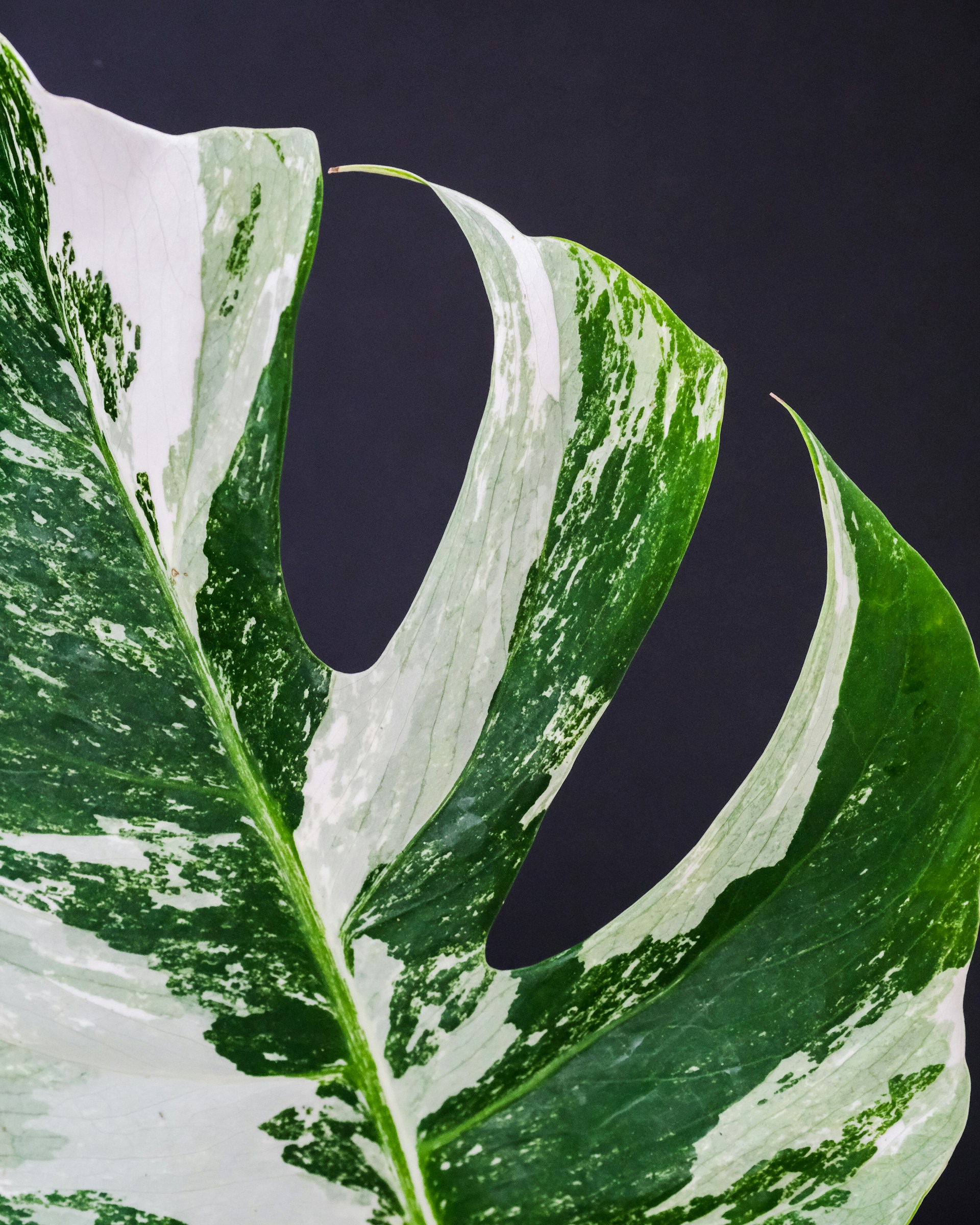
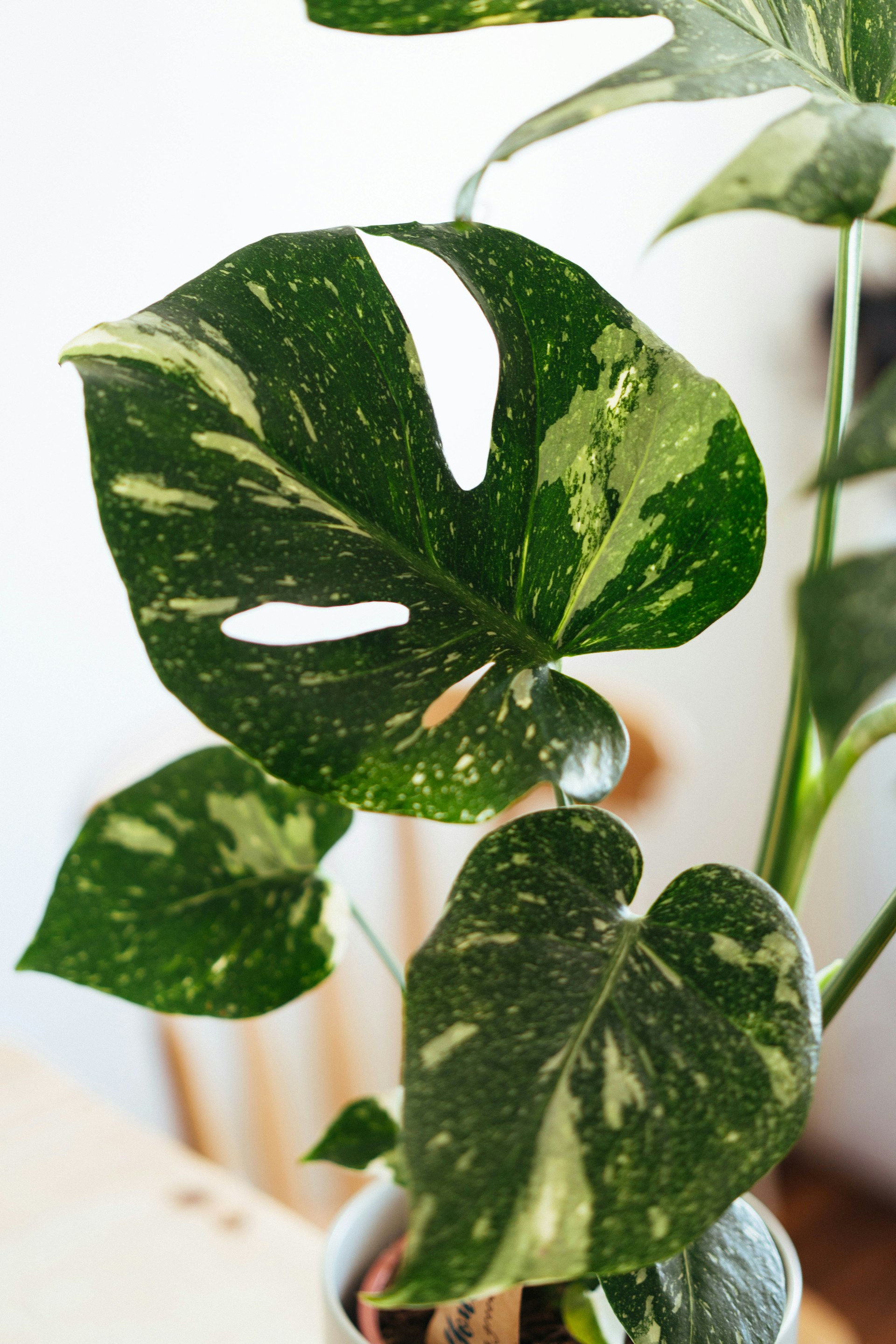
Bright filtered lightKeep the plant in strong usable light without abruptly exposing pale tissue to harsh direct sun.Learn more →Airy soilA chunky root zone helps prevent a slow-growing plant from sitting in saturated mix.Learn more →Stable variegationThai Constellation has a more stable mottled pattern than chimeric Albo forms, though leaf pattern still varies.Climbing growthAs the plant matures, support and even light across the vine help foliage size up.
Care priorities
What matters most
Prioritize bright filtered light and steady root-zone aeration.
Use a support as the plant climbs so mature foliage can develop well.
Avoid keeping a large pot continuously wet around a relatively small root system.
Watch for
Common trouble
Root decline if the mix stays saturated for long periods.
Scorching on pale variegated tissue after abrupt direct-sun exposure.
Scale insects and spider mites on stressed indoor plants.
Variegation note
Thai Constellation has a stable mottled variegation pattern compared with chimeric Albo forms, but individual leaves can still vary in how much cream pattern they show.
Propagation basics
Propagation still starts at the node
Use a stem section with a healthy node and growth point. Root development matters more than a fixed number of days before potting.
Thai Constellation is slightly slower-growing than the green species and benefits from stable bright filtered light, an airy root zone and patient watering. Resist the urge to compensate for slower growth by watering more often.