Greener new growth can be true reversion, normal variation between leaves, or a response that appears alongside changing growing conditions. The most useful evidence is on the stem and active growth point, not just one leaf.
Symptoms at a glance
Compare what you see
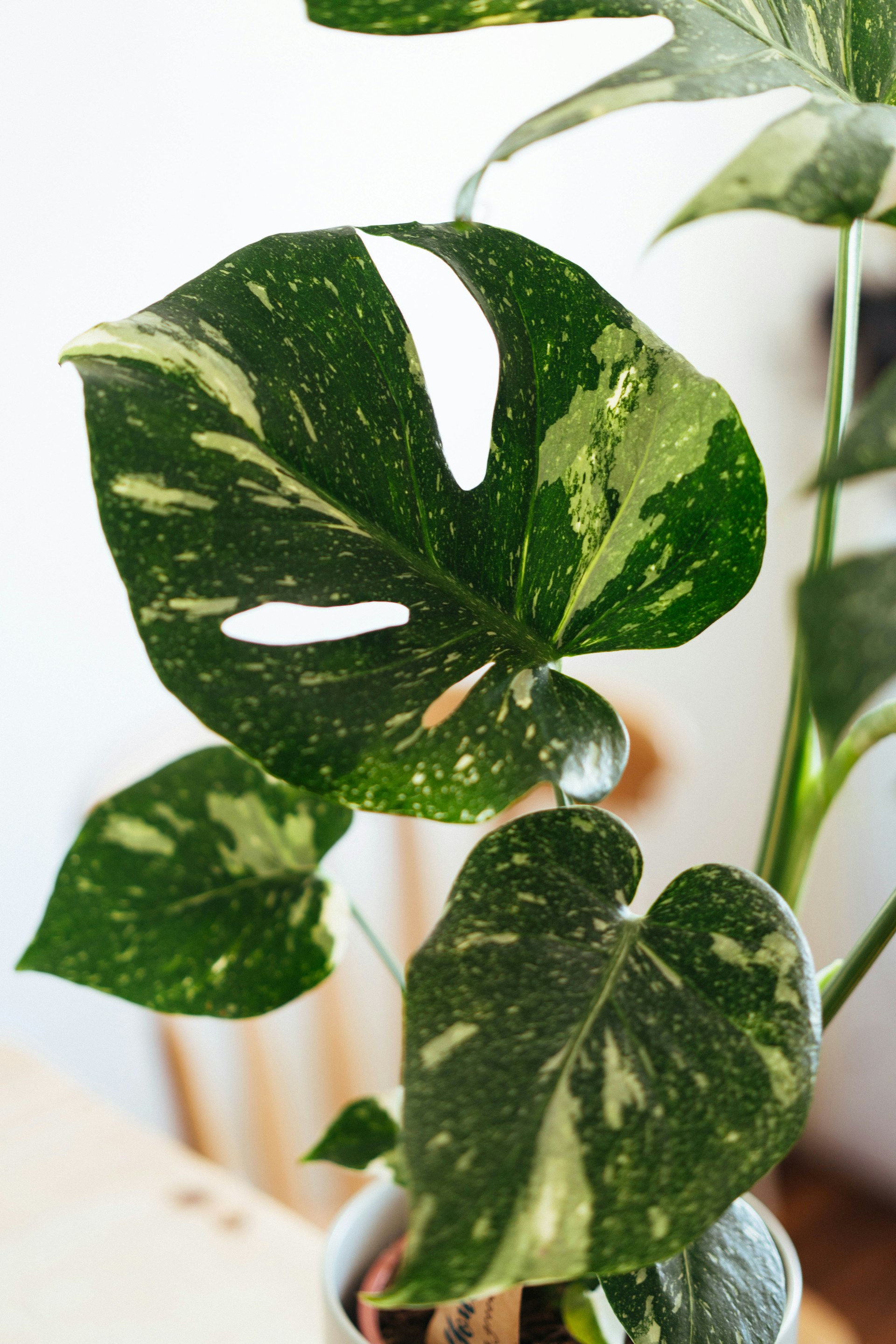
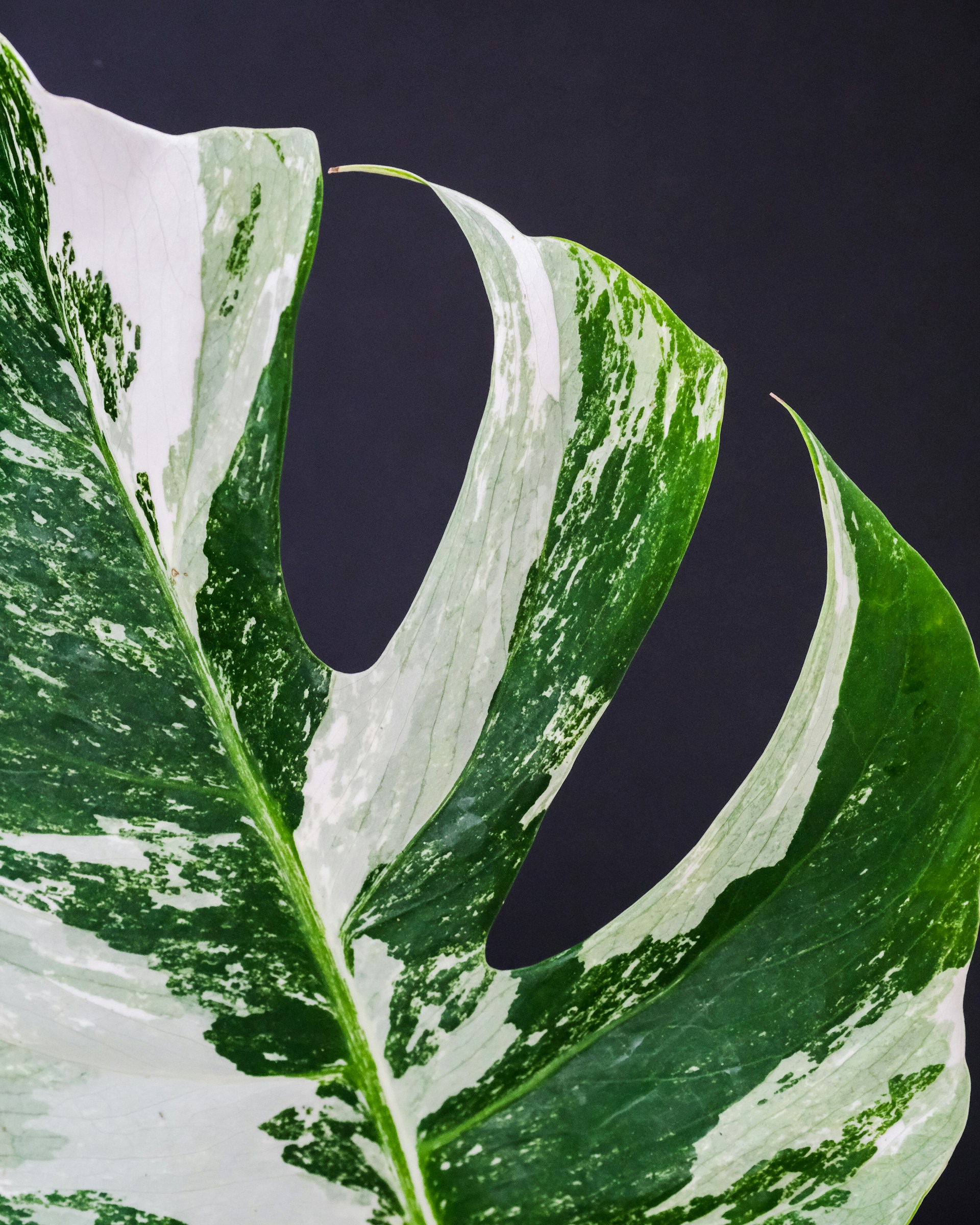
Healthy mixed variegationA healthy vine can vary from leaf to leaf while still carrying cream and green tissue through the stem.Greener new growthOne greener leaf can be normal; repeated green growth is the pattern to investigate.Read stem variegationFollow cream and green striping through the active stem rather than judging the leaf blade alone.Find the growth pointIf pruning becomes necessary, the node and axillary bud determine where the next vine can emerge.
How to confirm
Look for these clues
Compare several consecutive leaves instead of judging one greener leaf by itself.
Inspect the stem around the active growth point for visible variegation.
Look at the node and axillary bud if you are considering a corrective cut.
Note recent changes in light, repotting, shipping stress or general plant health.
Possible causes
Do not assume one cause
True reversionNew growth is repeatedly greener and the active stem or growth point is also losing visible variegation.
Normal leaf-to-leaf variationOne leaf can be greener than the last while later growth still shows variegation.
Growing-condition stressA plant under changing light or root stress can produce different-looking growth, so check conditions before assuming genetics changed.
What to do now
Work through the fix in order
1Compare several leaves
Look for a repeated pattern instead of reacting to one greener leaf.
2Trace the stem
Follow variegation through the newest internodes and growth point.
3Inspect the node
If you may prune, identify the lower bud you actually want to preserve.
4Stabilize care
Keep light and root-zone care consistent while observing the next growth.
Common mistakes
What makes the problem worse
Cutting after the first green leaf
One leaf is too little evidence for a corrective pruning decision.
Removing green leaves instead of reading the stem
Existing leaves are not the growth point that controls the next vine.
Trying to force white with fertilizer
Nutrition cannot create variegated tissue in a fully green growth point.
Assuming stronger light reverses genetics
Light supports energy balance but does not manufacture missing variegation.
Detailed guide
Variegated Monstera Turning Green? Can Reversion Be Reversed?
The full guide explains how to read the stem and node, what light can and cannot change, and when pruning may help.
The diagnostic goal is to separate a persistent change in the active growth point from a temporary or normal variation in leaf pattern. If the evidence is unclear, observe the next growth while keeping care stable rather than pruning immediately.

 How Variegation Works